Books

Books
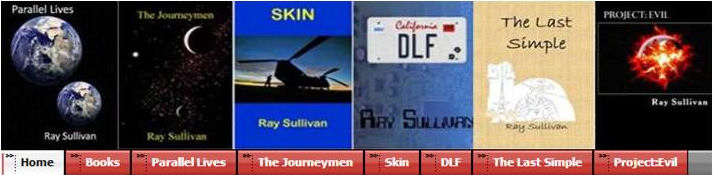
Books written by Ray Sullivan
Showing posts with label Netflix. Show all posts

Thursday, 17 July 2014

Amazon to launch 'Netflix' for eBooks - second update

* See below for update on this story*

** See below for link to Mark Coker's Smashwords' blog entry on this subject - interesting reading **

In a flurry of activity over the last few days it appears that Amazon has been trialling a new format that will support eBooks in the way that Netflix does for TV shows. The idea is that the consumer pays a monthly fee and has unlimited access to the Amazon library - well, maybe, more of which later.

It's interesting that commentators are using the phrase 'Netflix for books', because Amazon already owns a major competitor to Netflix, LoveFilm.  They've also spent a certain amount of effort in separating up the services from  LoveFilm, which is now indelibly marked with Amazon Prime in some form or another, with subscribers now being billed twice each month, once for Prime, and again for LoveFilm, but the total cost is the same as it always used to be.
 
For fully fledged Prime subscribers the benefits include free next day delivery (not actually free, it's what the monthly fee is for) and access to the Amazon library where you can download an ebook a month for free (not really free either, it's also in your  monthly subscription).  Regular readers will know that although I like the idea of Amazon providing its subscribers enhanced benefits such as the free ebook library, they'll know I'm not a big fan of how it's populated. 

You see, to get in the library you have to commit fully to Amazon.  If your books are listed in Apple or B&N, for example, then any you want included in the library have to be delisted from these other locations, with a minimum commitment of three months.  Personally I'm a bit of a free markets, market forces kind of guy who doesn't like monopolies.  If Amazon offered better royalties for my books I might be a little more interested, but apart from a slush fund used to bribe authors to engage with KDP Select, the process by which authors succumb to Amazon only, they are actually quite poor payers to authors like myself who chooses to price books nice and competitively.  Plus I don't like to feel I'm being told what to do, so I choose to stay listed in all bookstores.

Now it seems that Amazon took their experimental website down pretty soon after it was spotted and talk started across the net, so we don't have all the details, but the main rumour is that it will cost about $9.99 per month to subscribe, which will allow unlimited access to a vast library, so if you routinely spend more than this amount a month on eBooks it may look attractive.  What isn't clear is whether all the books available on Amazon are going to be available and if so, how are royalties going to be paid.  If it is just an extension of the KDP Select process than my books, for eight, won't be up there, although you can own, not borrow, all eight for less than one month's mooted subscription and have enough change to buy yourself a coffee (from a real coffee shop, not one of the overpriced, tax-dodging varieties selling milky froth for an exorbitant amount) to drink while you work your way through the first couple of chapters.

Whatever Amazon decides, I guess we'll know soon enough, because when they commit, they do it big time and they don't hang around. I'll keep you posted.

*18 July 2014 - Amazon have emailed all Amazon registered authors about the new service titled 'Kindle Unlimited'.  Their email confirmed that the books that subscribers (this is limited to the US at the moment) will be limited to those forming part of the KDP Select group - that is, those books that the authors have given Amazon exclusive rights to.  Any such book accessed through the kindle Unlimited service and read 10% or more through will qualify for a payment to the author.  As discussed above and in earlier posts I won't be participating in KDP Select while it insists on exclusivity, but good luck to those who elect to do so.

** http://blog.smashwords.com/2014/07/is-kindle-unlimited-bad-for-authors.html **
---------------------------------------------------------------------------------------                                                         
Visit my Book Website here


    Visit Project: Evil Website here                                        Visit DLF Website here

        Follow me on Twitter  - @RayASullivan

        Join me on Facebook -  use raysullivan.novels@yahoo.com to find me

Saturday, 1 February 2014

Netflix at High Noon

High Noon, the classic cowboy film, epitomises the ultimate showdown. It's ironic that the leading provider of streaming films and TV programmes is squaring up on the virtual high street flexing its fingers above the pearl handled pistols of public opinion.

Facing Netflix are the Internet Service Providers (ISPs) that it streams its content down. It is thought that streaming content accounts for about one third of all bandwidth in the US and some ISPs have been rumbling that they want a slice of the fiscal action resulting from all of this activity.

Or in plain English, they can see a successful business using their infrastructure as a conduit. Netflix wouldn't exist without the ISPs, they point out, which is a truism. Perhaps they have themselves picked up the odd customer by the utility that Netflix has provided, is another. In fact, the rise and rise of bandwidth is only just keeping pace with the continually rising usage of bandwidth by consumers. However this general uptick in utilisation along with the reciprocal rolling out of faster and deeper networks appears to be symbiotic at the least.

So the suggestion that companies that absorb large amounts of bandwidth should compensate the ISPs or face losing access to north American ISP subscribers has rankled Netflix. They are defending the concept of net neutrality, a concept that has been embedded in principle since the dawn of the internet age.

Of course the net has been robustly exploited for gain since the beginning of internet time, and you could argue that is what Netflix has done, having shed its DVD mailing service long ago in support of internet streaming. But it is supplying what people want and that is why they in turn are shelling out significant sums of money each month for access to faster broadband. The ISPs woo us with offers of faster access and unlimited downloads (subject to fair usage limits, so strictly not unlimited in any sense of the word) and we change sides based on the best deals available. To try and leverage extra cash for buying what they offered to snare our business is disingenuous to say the least.

Netflix are squaring up to the ISPs like the town Sheriff facing down the bad guys, calling on the good people populating the internet to back them. I'm up to join a posse, and have a virtual neckerchief at the ready. I only have one question - how come High Noon isn't available for streaming on Netflix? Some familiarisation training would be handy right now.

---------------------------------------------------------------------------------------                                                         
Visit my Book Website here
Books
        Visit Project: Evil Website here                                        Visit DLF Website here

        Follow me on Twitter  - @RayASullivan

        Join me on Facebook -  use raysullivan.novels@yahoo.com to find me

Wednesday, 12 June 2013

Is Apple TV The One To Watch?

It can't have slipped past too many people that Apple have been making announcements over the last day or two.  Much of the news has been substantially reported, or leaked as I like to think of it, for some time now.

For instance it has been an open secret that Apple were going to tidy up the iOS interface, removing all the fussy details and making the whole experience cleaner.  I suspect that they've been planning this longer than the six months or so that they've had us believe it was being worked on, quite probably it has been a longer term aim to pull the interface back to Apple core values for some time and perhaps the muddle iOS 6 found itself in was a catalyst for the final push.  Or maybe it was just pure coincidence.  I'll wait for the biography, it matters not.

But one revelation that didn't get too much notice in the reports I read was around Apple TV, probably because Apple didn't reveal too much about it.  Maybe they haven't worked out exactly what it is they want to achieve, so are waiting for the pundits to throw in their two-pennyworth first so that they can cherry pick the better ideas.  Outrageous, nobody should fall for that ruse, but here goes anyway.

Apple TV has been a long term project in Apple, something Jobs talked about but without any meat on the bones.  I think it was originally a hardware project, a device that let you watch TV on a superlative screen with an interface that was easy to navigate.  Well time has moved on and most screens are pretty good these days.  Navigation can be a black art on some TVs, so I guess there is mileage in that old Apple magic there.

But TV has changed radically over the last few years.  The dependency on the major network schedules has been eroded to triviality, the impact on the viewing figures changing the way producers finance their productions.  One thing is certain, the golden age of TV advertising as we know it has disappeared.  Most of us don't watch a lot of TV live unless there's a compelling reason - a major sporting event, breaking news, reality TV.  I'm guessing about the last one as that's what I hear from others - I've never understood how locking a bunch of morons in a house for a month on end, or gearing up a crowd of no-nothing egotists to compete to run make believe businesses is classified as 'reality'.  The only 'reality' TV I think should continue is 'I'm a celebrity, get me out of here' for the simple reason that I suspect one season Ant and Dec will march the so called celebrities into the jungle and then the TV crews will abandon them all.  We can hope, send me an email when that happens because if I'm watching TV at all it'll be on DVR.

DVR is an almost acceptable halfway house, where we can record hundreds of hours of programmes we might possibly want to watch in the future.  It's all kidology, of course.  Most we'll decide against or the hard drives will corrupt before we get anywhere near the bottom of the ever expanding lists of programmes we have recorded.  I have a suggestion for using the DVR - each time you record a programme put a pound or a dollar in a jar as if you are paying for the right to record the programme. IOUs are acceptable as long as you pay them up with interest on payday.  Take a note out when you watch a recorded programme.  Now you're putting a monetary value on the record button you might be a bit more surgical.

But we're not going to be using DVRs for much longer, because it's so inefficient unless you haven't got access to broadband, then it's indispensable.  But if you have access and if someone smart comes up with a way to select programming as and when you feel like it, for a subscription fee, then that's what you'll use.  We're nearly there now with Lovefilm and Netflix vying for our wallets, with Amazon funding TV show productions as well, but somehow it isn't quite right.   Of course Lovefilm have played a long game, building up the customer base and getting the distribution spot on.  Now that Amazon control Lovefilm that end will only improve further, but as always it's all about market share with Amazon and somehow that always leaves me a little uncomfortable.

Netflix are playing catch up, at least this side of the pond, but they do provide a good service.  However I don't see them surviving an extended war against Amazon, letting alone winning.  But pitch someone like Apple into the fray and you've got a different battle, one that Amazon will find challenging.  Apple will think the process out carefully, probably have a long time since, and if Apple TV is a subscription internet streaming service then they will challenge Amazon directly.  There may be a hardware element, but I don't think we're going to see an Apple TV set anytime soon, if at all. 

There's good reasons to think this, apart from the blindingly obvious that there are plenty of perfectly good TV sets out there and Apple can't just create a new broadcast standard to differentiate itself.  Instead it would have either produce a niche, US product, not really their global vision these days, or they'll have to consider the NTSC, PAL, SECAM muddle and include HD with 3D.  Not your standard Steve Jobs rationalised product range at all.  Apart from teaming up with a major TV manufacturer to lend their Apple vision to the TV interface to augment their project I can't really see Apple getting too close to TV manufacturing.  Unless they come up with a true internet TV that is independent of the various standards.  Now that could work.

However, in the meantime, a streaming service that will leverage iPad capabilities but will still run on standard TVs, perhaps through an adaptor, sounds like an Apple product.  If you're watching TV, the watch Apple.  Because you will soon.

------------------------------------------------------------------------------------

                                                          Visit my Book Website here


        Visit Project: Evil Website here                                        Visit DLF Website here

        Follow me on Twitter  - @RayASullivan

        Join me on Facebook -  use raysullivan.novels@yahoo.com to find me

Saturday, 25 May 2013

Xbox One New Media Giant

When I was at the Gadget Show Live we took a well earned rest in the Microsoft demonstration workshop somewhere near towards the end of the show.  We'd been on our feet for hours and felt the need to sit down and let someone else do all the talking - to be fair, I do go a bit when I'm at one of these bashes.  To be honest, I wanted to see what Windows 8 had to offer - many of the machines on display outside of the Microsoft trade stand didn't have usable software loaded so I couldn't see how it worked with Office, for example.

Anyway, a Microsoft guy pitches up and shows us that he's got a Windows 8 mobile phone, a Dell laptop running Windows 8 and he pointed vaguely in the direction of the right hand side of the stand and declared he had an Xbox over there.  To be fair he could have pointed at any old pile of geek tech nonsense because gaming isn't really my bag.

Then he went on to demonstrate how you can stream a film on one device, stop it and pick up the film on any of the others.  He also showed how you can control the Xbox with the  mobile phone, remotely if needed, so you could set your Xbox to record a programme while travelling home on the train.  He did some gaming things that washed right over me - there's a good reason why I don't have any of those gaming machines at home.  We've got enough tech gear gathering dust without adding any more.  Now I'm not naïve, I can spot a well rehearsed presentation when I see I see one - I've spent many years as a technical and systems instructor myself- and I suspected that there was a suitable amount of smoke and mirrors at play.  To be honest, at one point I was expecting David Copperfield to walk on.

Anyway, as we walked out of the presentation I turned to my wife and mentioned that I didn't know the Xbox was a full media machine and deep inside I thought it could be the way forward, the link between smart TVs, DVRs and downloadable content.  It appears it wasn't an illusion after all.

Microsoft have just released previews of their latest iteration of the Xbox and it seems that gaming, while still a core element of the machine, it isn't the be all and end all of it.  In fact they've made some changes under the hood that has angered a lot of die-hard gamers, moving the processor technology closer to standard PC equipment.  That does mean that it should be easier to port PC games across to the new Xbox, now called Xbox One if you're asking, but apparently there are issues with backwards compatibility.  You've got to hand it to Microsoft, they do have a habit of resurrecting the same old chestnuts every so often - I could be writing about the windows 95 launch and not need to change many of the words here.

But the parts of the new device that interest me is the media aspect.  It looks like Microsoft are pitching this at a new audience and producing a machine that will appeal to those who watch films and TV, listen to music and maybe play the odd game.  To help sell the new version they've built Kinect into the machine instead of having it as an add-on.  This part will not only contribute to interactive gaming but also gives you access to voice commands to control your media watching as well as allowing you to wave your arms around to stop and start recording.  In fact, going back to the demonstration, you should be able to wipe the Windows 8 tiles across your TV set with a wave of an arm, making your TV into a virtual touch screen.

But looking a little deeper it looks like Microsoft are positioning themselves into providing media access, stepping onto the toes of Apple, Amazon including their Lovefilm subsidiary, and Netflix.  Whether they'll tee up a strategic arrangement with one or more of them remains to be seen, but going back to that Windows 95 period I would suggest that any such strategic alignment is likely to end in tears for whoever signs up with Microsoft.

So Windows 8 isn't just a new operating system, it's a paradigm change.  Instead of having a separate instantiation of the OS on each machine you own, acting independently to all other instances, they all work together.  You log in using your Microsoft login and you access anything you have legitimate access to on any Windows machine you are logged on to.  I can't comment on how this new Xbox looks like to the gaming world - and I'm aware there are a few unhappy bunnies out there - it certainly looks interesting to those of us who use other forms of media.  One to watch.


------------------------------------------------------------------------------------

                                                          Visit my Book Website here


        Visit Project: Evil Website here                                        Visit DLF Website here

        Follow me on Twitter  - @RayASullivan

        Join me on Facebook -  use raysullivan.novels@yahoo.com to find

Sunday, 4 November 2012

Is BT Vision Seeing the Future?

Apologies, but this is going to be one of those blogs that is relevant mainly to UK readers, although I often find that whenever I make that assumption I get more hits from across the pond than for my more international articles.  Curiosity, I presume.  Maybe it's my accent.

Anyway, I'm a self confessed moving image technophobe and, it must be acknowledged, a cheapskate of almost professional standing.  Consequently I  haven't invested much in the way of securing additional TV channels.  To be fair, and this is probably more of a reflection on me, with the advent of digital programming and the multitudinous free to air terrestrial channels that slip down my aerial every day and night (90 odd at the last count) I haven't really felt the need to invest in extra-terrestrial technologies.  Which given I'm a Sci-Fi writer probably seems a little unadventurous, but if I wanted my house to look like a miniature version of Jodrell Bank I'd have moved to Congleton down the road.

However I decided to see if I could get a better deal from BT (British Telecom) who I've used for my landline and broadband for the last ten years.  It was their fault, actually, they sent me an offer that looked like it would let me phone for virtually free.  It wasn't as good a deal as it sounded, but that would appear to be a trend with BT.

Now they've been plugging a service that uses broadband to push TV programming via your router for some time - you know, glossy advertising on the TV and in every letter they sent me.  It's called BT Vision. However trying to get to the nitty gritty of what BT Vision offers has proven harder than it ought to be, so that's the purpose of this blog.

Anyway, I phoned up BT and challenged them to improve my phone bill and was offered a small discount per month on my fixed costs, about a fiver, a doubling of my broadband from a notional 40 MPS download to an even more notional 80 - for clarity, it has about doubled but wasn't anywhere near 40 in the first place.  Still, it was and is much better than at work where we post letters as they arrive faster than emails on the company intranet!  BT also threw in BT Vision for  year, explaining that this was saving me £5 a month (or £60 a year).  Mind you, I had to pay £49 to activate my 'free' BT Vision (it's offered at ten pounds less for new customers, so much for loyalty).  At least the hard drive recorder is free, I guess. So I gave it a go and a couple of weeks ago plugged everything in and tried it out.

Here's the headlines for anyone who is thinking of choosing BT Vision.  You get all the normal freeview channels that you can get on your digital TV and/or existing hard drive recorder.  You also get access to the BBC iPlayer and the commercial channel equivalents.  So no more hooking up the laptop to the TV or watching missed programmes on a laptop.  Essentially it makes your TV into a nearly smart TV - I haven't found a way to use it to surf the Internet yet and suspect that functionality won't be there, because if it was everyone would just surf to Lovefilm and BT Vision would be dead in the water.

It also gives you access to pay-per-view programming.  If you're on the £5 a month tariff this works out quite expensive with pretty normal programming material running at £1.10 per episode.  Did I mention I'm a Cheapskate?  Don't ask about the price of films!  There is a more expensive option, about £14 a month, and that gives you free access to all of the pay-per-view programming as far as I can see, but to be honest there isn't anything there that you can't get from Lovefilm, and Lovefilm has a lot more on top.

So, if I discount the 'activation charge' against the monthly payments I've still saved a fiver a month, I've gained a hard drive recorder (not sure if that goes back if I cancel at the end to the 12 month lock in period, I'm fairly certain it won't work without a subscription though), I've converted my TV into a halfway house smart-ish TV and will still need to use the laptop to view Lovefilm, because I'm blowed if I'm paying £1.10 an episode.  In 12 months time, unless we discover something really mind-blowing about BT Vision, we'll dump it and probably look at a smart TV (or whatever is ruling the roost in a year's time).

If anything else rears its head in that period, then I'll update this entry.

-------------------------------------------------------------------------------------


I can be followed on Twitter too - @RayASullivan
or on Facebook - use raysullivan.novels@yahoo.com to find me

Why not take a look at my books and read up on my Biog here

Want to see what B L O'Feld is up to?  Take a look at his website here

Worried/Interested in the secretive world of DLFs?  Take a look at this website dedicated to DLFs here, if you dare!

Sunday, 28 October 2012

eBooks - Buy or Rent?

Regular readers of this blog will know that I'm a fan of eBooks.  I'm also a bit of a biased observer, given that I have an eBook or six up for sale, but at least I'm up front about that.  I've mooted on several occasions that the days of brick and mortar bookshops are numbered, save for a few specialists, and that we'll be reading our newspapers and magazines on tablets in a few short years.  OK, the timing is part speculation, part based on research in the US.  And the bit about tablets is based on the technological flavour of the moment - there could be some fantastic evolutionary development just around the corner but I suspect the tablet has some distance to run yet.

However it seems there's a fly in the ointment that may play into the hands of the naysayers of eBooks.  It's about what you actually buy when you pay for an eBook.  Or a digital download of a music track, or a download of a movie or computer game.  Now, when I buy a paperback - I do still now and then, just to check out the alternative technology - I can pop it in my bookcase and let other family members read it too. Friends as well, at a push. I don't have the right to photocopy the book and sell that on, nor do I have the right to type the story out and sell it as my own.  But I can let others read it.

When someone downloads one of my eBooks I kind of assume they have similar rights, just as I do when I download eBooks from Amazon or Smashwords.  But it seems that may not be the case.  Recently a Norwegian lady found that Amazon froze her access to her Kindle books after her Kindle developed a fault. Somewhere between her reporting the fault and Amazon replacing the Kindle they decided for some undisclosed reason that she had breached their rules.  That meant that she couldn't access her books on her iPad through the Kindle App and of course, as her Kindle was Kaput she couldn't read them there, either.  Initially Amazon stonewalled her but, in the face of a very public complaint reinstated her access.  There is a technological answer to this, though - run your Kindle books through Calibre to remove the Digital Rights Management code and store a copy somewhere safe.

This isn't isolated.  There was a situation over a year ago where Amazon were slapped for letting someone sell books through the Kindle store that didn't belong to them - as I say, people don't have the right to type out someone else's story and sell it as their own.  Amazon responded by, amongst other things, sucking books off Kindles that had been bought in good faith.  A bit harsh, seeing as the mistake was essentially Amazon's and to be fair they have promised not to do that again.   The point is, once you sync with Amazon, or Apple, or Kobo etc, they can re-write your digital library according to their wishes.

It's even bigger than eBooks - as if anything could be bigger!  No other than Bruce Willis, the star of the Die Hard series, is challenging the rights of Apple to dictate that when he dies, his iTunes account dies with him.  Not literally buried in the same casket, of course, but all those iTunes he has bought over the years will not be available to his family to play.  Now when I shrug this mortal coil my family will have a substantial amount of vinyl records and CDs to play or hawk on eBay, whatever - and I guess that Apple, Amazon and any other digital purveyor will have to get over it.  But anything I've bought on Apple etc may not be available.  Of course, unless I experience a dramatic reversal of artistic fortune I guess that Apple et al are more likely to hear of Mr Willis's demise than mine.  Bruce (I hope I can get away with using his first name) is apparently considering legal action, however at least one commentator reckons that the Apple claim to his music is at best bluster.  I'll leave it to the lawyers, at least it's an honourable topic to take to court.  Way better than arguing about who owns the right to apps bouncing back a fraction.  Or whether a rectangular phone with curved edges is legally cooler than other rectangular phones - with or without curved corners.

But this does need to be resolved.  eBooks are the future of reading, of that I'm sure.  However if there is doubt about legitimate ownership, as opposed to sharks and low-lives hawking other people's work on eBay for an unearned profit in 'compilations', then it will take longer to establish.  DRM probably isn't the answer and anyone who buys a book from Smashwords, for example, get that book DRM free.  Ultimately, the digital sellers have to realise that for years we've all had access to our parents' records and books and perhaps as kids that was what we listened to and read, but in the real grown up world we tend to listen and read our own generation.  Sure, it's a great nostalgia trip to go back to our parents' faves now and then, but most of us don't do that often or even willingly.

For the record, I think we chould be buying, not renting.

--------------------------------------------------------------


I can be followed on Twitter too - @RayASullivan
or on Facebook - use raysullivan.novels@yahoo.com to find me
Why not take a look at my books and read up on my Biog here

Want to see what B L O'Feld is up to?  Take a look at his website here

Worried/Interested in the secretive world of DLFs?  Take a look at this website dedicated to DLFs here, if you dare!

Tuesday, 17 April 2012

Amazon On Fire, Rumours of War

There's no shortage of rumours on the blogosphere, and this blog isn't shy of promoting a half-baked, unsubstantiated rumour.  As hacks at one of the UKs premier newpapers have been proud to declare in the past, we don't like the truth to get in the way of a good rumour.

There's a couple of rumours that have been circulating for some months in various forms that now appear to be gaining a degree of believabilty despite being increasingly played down.  I suspect that the down-playing of something that appears to be firming up is a sensible reaction - it kind of hedges the bets.

So I don't know if any of the following is likely to pan out, but my gut thinks it will.  So do many of the web pages touching on these rumours, albeit with covering caveats.  I'll leave the caveats with them.  If I'm wrong, I'm wrong.

The first rumour gaining strength is that Amazon are looking to launch the Kindle Fire in the UK and Europe pretty soon - guesses on dates are hazy and I've mooted in a previous blog that Amazon need to address this gap by Autumn to give them a good run up for the Christmas shopping frenzy.  Some good observations circulating out there have caused me to review that estimate and bring it forward to the Summer.  Why?  Well the most compelling arguments for a sooner-rather-then-later release is the emergence of Netflix in the UK and Sky launching its own Lovefilm-alike product.  Lovefilm, an Amazon company, makes a natural complement to the media stregths of the Kindle Fire, but will become a watered down addition as these products catch the public eye.

The next rumour, and one that's been floating since January, is that Amazon are about to launch two new versions of the Kindle Fire.  One is just an upgraded device and would appear to be a natural developmental thing - they've shipped millions of the blighters in the US and must have shaken down the inevitable issues by now.  The January rumour was probably way too early for Amazon to have made firm decisions about, but now would seem reasonable.  Whether version 2 is released in the UK as the initial version, only time will tell, but it would make sense to launch with it if the timing pans out.

Another Kindle Fire release rumoured is a ten inch version,  a la Apple iPad.  This is one rumour that is most frequently hedged in the Internet, however the size of the iPad hasn't harmed the Apple sales noticeably.  Clearly a ten inch Kindle Fire will cost more and will probably nudge up to the lower cost regions of the Apple devices, but could work if Amazon get the whole holistic infrastructure eco-system bit right.  If they don't, then the hedge-mongers will be proven right - nobody seems to want to pay Apple prices for sub-Apple environments.

The final rumour gaining momentum out there in cyberspace is that Apple are looking at marketing a seven inch iPad.  Again, it's been floating around for months and generally has been discounted.  Certainly Steve Jobs dismissed the concept of a seven inch iPad as unworkable, however it's well documented that the development of the iPad was shelved for a period while the iPhone was developed - that's right, they invented the iPad before the iPhone but chose to launch the smart phone with its relatively tiny screen ahead of the iPad.  so I'd say Steve was being a tad disingenuous regarding screen sizes - he didn't have any qualms about giving the world a significantly smaller screen when it suited him.  My guess is that the new leadership at Apple, watching the Kindle Fire eat into its market share with a puny seven inch screen, will see the opportunity to tap into that market.  And provide a more affordable iPad into the bargain that also lets it launch a 'new' product.

In my book, this is war.  At least that's the rumour I'm putting about.

------------------------------------------------------------------------------------------------------------


I can be followed on Twitter too - @RayASullivan
or on Facebook - use raysullivan.novels@yahoo.com to find me


To find out more about my ancestors visit my sister’s website http://sullivanfamilyhistory.angelfire.com/

Visit my books on Amazon (for Kindle owners) and Smashwords (for access to all other formats and access to Apple iBooks, Barnes and Noble, Sony, WH Smith, Kobo and many other good ebookstores.

Digital Life Form is available on Amazon.com in paperback for $8 (or for £5 plus P&P in the UK for UK readers - contact me on raysullivan.novels@yahoo.com for details)

The Last Simple is available on Amazon.com in paperback for $6.

The Journeymen is available for $9


For quick access to the various Kindle, Kobo, WH Smith and Smashword links please use the table below to view my books.

To View My books In....

Tuesday, 27 March 2012

Head in the Cloud

Hands up if you've got a bookcase crammed with books?  How about a CD shelf?  A frightening number of DVDs bursting out of your TV cabinet?  Box of photos in the attic?  And by box, I mean a big box.  I'll bet half of you still have video tapes and, if I probe enough of you, at least one will still have some Betamax tapes, next to the eight tracks on the shelf.

Yup, in what seems a blink of my eye, but is probably more than a lifetime for some of you, technologies have come and gone and will probably disappear without a trace in the next ten years.

Books?  Well you should know my view by now, sure there will be a resistance to eBooks but that will change - pricing, ecological arguments, the sheer convenience of carrying around countless books will reach a tipping point soon.

Music?  In my lifetime I've seen vinyl go, come back, go again, resurface and despite holding respect for a minority of collectors will go once and for all soon.  The unit cost of manufacturing, the ecology point (again) and the viable alternatives will render vinyl as relevant as the eight tracks some of you still love to play - both of you.  CDs are going the same way, and I'll admit to being a bit of a dinosaur here as I still buy the odd one myself.  But the future isn't plastic based, it isn't even physical in the sense of hard drives, USB flash drives and MP3 players.

The same goes for your photos, the fading ones in the box upstairs and the thousands on various media associated with your digital camera.  Let's face it, they're becoming unmanageable and difficult to keep track of anyway.  Some will be duplicated on several hard drives, DVDs and flash drives, others, probably the ones that you really want to keep, are in one place only.  If you can remember where they are, it would be great.

And what about those films on DVD and Blu-ray?  Think of it as a temporary solution that is almost played out.  Already we're hooking into Lovefilm and Netflix for our old  films and TV programmes.  The established TV companies are struggling to pay their way using the traditional advertising model.  It doesn't work anymore because increasingly we're recording our TV on hard drive recorders and fast forwarding through the ads.  Think of 2015 (or thereabouts) as the year the networks went subscription.  Once that step is made then programming as we know it will disappear also - programmes will be released at a point in time and will then be available for viewing when required.  With subscription YouTube will almost become redundant as we'll all have our own personal YouTube.

Sure, there will still be advertising TV, but it will be for those who won't or can't pay for subscription TV.  But who wants to pay to advertise to the poor or the tight fisted?

All of these activities will take place on Clouds, the huge server networks being constructed and linked around the planet.  Apple have one and millions of us are using it.  Amazon are developing theirs - it's up and running in the US but I think they are struggling to broaden it across Europe, which is probably as good a reason as to why the Kindle Fire still hasn't launched here.  Your mobile phone probably uses a cloud and if you prefer webmail to a client based service such as Outlook then your emails are sat on a cloud.

Cloud based storage has moved from a concept to a reality in a few short years.  It is being used by you and me, often unknowingly, and is used by small, medium and large corporations.  Governments and their agencies are tapping into Clouds big time.  Bolt on your remaining legacy photos, music, books; add subscription TV, film and music and you'll find that we're up in the Clouds and there's no going back.  Or, indeed, down.

---------------------------------------------------------------------------------------------------


I can be followed on Twitter too - @RayASullivan
or on Facebook - use raysullivan.novels@yahoo.com to find me


To find out more about my ancestors visit my sister’s website http://sullivanfamilyhistory.angelfire.com/


Visit my books on Amazon (for Kindle owners) and Smashwords (for access to all other formats and access to Apple iBooks, Barnes and Noble, Sony, WH Smith, Kobo and many other good ebookstores.

Digital Life Form is available on Amazon.com in paperback for $8 (or for £5 plus P&P in the UK for UK readers - contact me on raysullivan.novels@yahoo.com for details)


For quick access to the various Kindle, Kobo, WH Smith and Smashword links please use the table below to view my book


To View My books In....