Books

Books
Books written by Ray Sullivan
Showing posts with label WH Smith. Show all posts

Thursday, 17 October 2013

Blame the Triple Breasted Whore

Last weekend I went to see the live theatre production of the Hitch Hikers Guide to the Galaxy Radio Show, an ambitious performance that attempts to draw inspiration from all five books of Douglas Adams' famous trilogy.  To be fair, most of the production covered the original subject matter from the original radio series, but by carefully excising some significant parts of that story the cast were able to shoehorn some less familiar parts of the H2G2 story.  I may have missed it, but one omission appeared to be the triple breasted whore of Erotica.

It seems I'm not the only person to have missed references to erotica.  A British national newspaper pointed out, or exposed in the parlance of the industry, that WH Smith, a stalwart bookseller of the British high street and the internet was selling erotica on its website.  It answered a question I asked myself in passing some time ago but never bothered to research.

You see, Smashwords, the eBook aggregator that supplies self published books to Apple, Sony, Kobo (and by inference WH Smith as they have tapped into Kobo's catalogue) and Barnes& Noble, to name a few, has forged a home for erotica books alongside many other genres.  Now I don't write or read erotica, but I don't judge those who choose to either.  It's just not my bag.  My guess is that if Smashwords hadn't become the distributer of eBooks that it has then it would have faded into insignificance as a niche seller of erotica books by now.  What Kobo may or may not have realised and WH Smith clearly didn't was that once the authors of the erotica market had achieved the formatting standards required by Smashwords their books were eligible to be shipped to all of the above eBook sellers unless they excluded them themselves.  Apple realised this about a year ago and started to vet the content of the eBooks they took from Smashwords.  This was a very public happening that Kobo and WH Smith should have been aware of but clearly didn't think it worthy of following, possibly because it requires effort and therefore costs money.

Now WH Smith have been outed by the newspaper they have taken their eBook store down completely, Kobo have removed a lot of eBooks, possibly everything they have received via Smashwords.  I haven't carried out a lot of research (spotting a pattern here?), but I can confirm that my books, which do not contain erotica, have disappeared from Kobo.  My guess is that once W H Smith have identified all of the self published books, regardless of content, then they'll restore their eBookstore.  Which means that they'll resume selling 50 shades (originally a self published book) and of course the Hitch Hikers Guide, along with its harmless references to the triple breasted whore.  They will stop lots of erotica being available, and that's fine, but many other good books are going to be blocked from the public.

Smashwords owner, Mark Coker, is understandably outraged by the reaction.  I'm actually surprised it has taken this long to come to a head.  The self published phenomenon has trundled along unregulated for quite a while.  It has challenged the established publishing industry and caused it to take stock.  That is healthy, the old way of working wasn't moving literature forward as well as it could and the prices were, and to some degree remain, too expensive.  But one price has been the lack of control over self published books.  Apple have taken some control over this matter; it's time the other eBook sellers do so too. 

Taking all the books off sale should be, at most, a short term solution.  While  I agree that under the current paradigm, like the one it left behind, good, well written books may or may not be successful but in general badly written books of any genre should fail.  The issues around the subject matter of some books being objectionable to people need to be addressed - the young and the vulnerable especially should be protected from inadvertent exposure and WH Smith is right to want to remove them from their catalogue, but it's really important that a sense of perspective is maintained.   Smashwords is looking at a voluntary metadata process where authors declare if their book is unlikely to be suitable for Apple or Kobo.  I think this is pie in the sky - some authors may play ball, but some, perhaps many, might ignore it.  Also, I suspect that Sony and B&N may go down this route sometime soon.

What I suspect Smashwords needs to do is what Apple have been doing - adding a vetting process to all books before they accept them in their premium catalogue.  I'm sure most of this could be automated with perhaps a process for the public to alert them to books that have slipped through.  Then they can earmark any books that contain offensive (to some) subject matter - we're talking about incest, rape and other unpleasant subjects here.  They can then alert any resellers who want to limit their exposure to corporate risk who want to avoid these books.  They could also dispense of the prude filter they put on their website and just keep such books corralled in a subsection that potential readers have to overtly access.  That way, trust in the self published book industry would be restored and newspapers would be free to move on to something else to disrupt.

------------------------------------------------------------------------------------

                                                          Visit my Book Website here
Books
        Visit Project: Evil Website here                                        Visit DLF Website here

        Follow me on Twitter  - @RayASullivan

        Join me on Facebook -  use raysullivan.novels@yahoo.com to find me

Thursday, 31 January 2013

Amazon - profits down, eBooks up

Amazon, the biggest online retailer of them all, has just announced a dramatic drop in profits, down by $80 million for the last quarter compared to the same quarter a year earlier.   It's not for want of trying, though, as they increased their revenues from around $17.5 billion in that quarter a year ago to more than $21 billion this time around, a rise in trading of around 22%.  Jeff Bezos needn't panic, his profits were still nearly $100 million for the three months leading up to Christmas.

 However, this means Amazon are cutting margins aggressively, which given the current market conditions isn't unusual.  And let's face it, $100 million profit in a quarter isn't to be sniffed at.

Jeff has pointed out that one area that is in decline for his business is print books. To be fair, the decline is in the rate of increase - they grew  by 5% in December, which is the slowest growth rate in Amazon's 17 years as a book seller.  In contrast eBooks are growing like mad, up 70% or so on the same quarter the year before.  As Jeff points out, the eBook business has grown from nothing five years ago to a multi billion dollar category for Amazon.

So, with profits like this in such a tough trading environment being relatively buoyant, it should be no surprise that the market reacted positively to Amazon's announcement - I'm guessing the markets have noticed a little bit of tough trading conditions generally.

Jeff was certainly smart enough to realise that eBooks were ripe for the consumer market five years ago - up until then they had been quite niche and the almost blanket avoidance by the mainstream publishing industry helped to keep them that way.  But Jeff helped to take eBooks out of the shadows and into the spotlight, realising that for a major bookseller it is a heck of a sight cheaper to stock millions of electronic book files compared to the miles of racking needed to maintain stocks of physical books.  That and his move into Print on Demand stands to reduce his physical inventory, hence his real estate costs, big time, long term.

So Amazon have helped to create the eBook model that is driving us all forward right now.  They have also realised a long time now that volume sales of any given book isn't necessary as long as they have the lion's share of all the sales - they've eliminated the cost of storage as far as eBooks are concerned, so it doesn't matter if any given book sells well or even at all, in the round the total sales of data over the internet creates the wealth.

Which is why Amazon are pushing the KDP Select program again.  Like all Amazon self published authors I've just received my monthly eNewsletter pushing the program heavily.  Put it this way, if Amazon hadn't decided to incentivise KDP Select then they could have topped the $100 million profit.  On the face of it, KDP Select is pitched as a way of rewarding Amazon Prime customers, itself a vehicle to monopolise the online selling market.  But if it was just that, then Amazon wouldn't need to insist on exclusivity of sales, a concept that is pretty much illegal in most industries.

I worry about the day when Amazon have driven all the other major players off the planet - and Jeff is investing in space flight technology as well, so just being off the planet may not be sufficient in years to come - then how will that affect consumers?  To Amazon, choice is about being able to buy virtually anything through them.  To me, choice is much broader, it's about having different sellers available to pitch their wares.  I can make my purchasing decisions based on price or on service, or on quality.  Or on a thousand different parameters, some tangible, others less so.

Like most of you I buy from Amazon, including eBooks.  But I try to ensure that I don't become a dedicated funding line to Jeff and his empire.  Apart from my purchasing choices I actively resist the KDP Select program.  OK, my attempt to bring Amazon to its eBook knees a little while ago didn't result in a revolution, but did create enough interest to become my fifth most read blog entry ever almost overnight - if you haven't read it, or shared it with someone who might be of a like mind then you can access it here.


---------------------------------------------------------------------

I can be followed on Twitter - @RayASullivan
or on Facebook - use raysullivan.novels@yahoo.com to find me

Why not take a look at my books and read up on my Biog here

Want to see what B L O'Feld is up to?  Take a look at his website here

Worried/Interested in the secretive world of DLFs?  Take a look at this website dedicated to DLFs here, if you dare!


Thursday, 3 January 2013

Should Self Published Authors Boycott Amazon?

Self published authors have a lot to thank Amazon for.  Amazon didn't invent the eBook revolution, but it was a major player in its development.

eBooks have been around for quite a while.  Probably the first major attempt at producing them was Project Gutenberg; in fact their website claims that they invented eBooks in 1971.  I have no reason to challenge that claim.

But in my opinion it was Sony who brought eBooks to life through their first eReading devices.  That was a few years ago, probably about six, and the devices were comparatively expensive by today's prices; basic too.  However, they formed a loyal following and I have to admit I was seriously considering buying one myself just before Amazon launched the first Kindle range.  It wasn't the Kindle that changed my mind and stayed my wallet all those years ago, instead it was the reviews that followed Sony's latest eReader of the time.  The critics slammed Sony for paring back the features and producing a machine that was deemed inferior to the model it had replaced.

Of course, with 20/20 hindsight it is possible to conjugate that Sony had got wind of Amazon's initiative and had cut back on the spec to keep the model competitive price-wise.  Whatever the reason, Sony have not seen the same level of organic growth other manufacturers of the devices have since.

Amazon played around with the device for a few iterations until, with the release of the Kindle 3, they hit the public conciousness.  But they hadn't just played with a piece of hardware, they'd been aggressively pushing for conventionally published books to be released in eBook format, a move that was met with some resistance by the industry and one that led to some interesting court judgements recently.  This was a brave move by Amazon, if only because they chose to ignore what was fast becoming the de facto industry standard of EPUB, instead creating their own version of another, less popular standard named Mobi.  Anyone who has lived through a technology standard war, such as the Betamax/VHS battles of the eighties  will know that it only ends in tears somewhere.  I think it is only due to the phenomenal  success and power of Amazon that they have succeeded in pushing through a version of Mobi that only their machines read. They also encouraged self publishing by authors - either those who had never been published previously and those who had and had the rights to publish their own, previously published, work.

In fact, many self published authors only consider using the Amazon self publishing process, named Kindle Direct Publishing (KDP) as it serves their needs.  Others only use it because they either don't know how to access the alternative platforms or are concerned that they will become engaged in a process that they find difficult.  A third group only use Amazon because they have succumbed to an outrageous bribe by Amazon with the intention to create a monopoly.  This bribe is achieved by Amazon putting up serious money - around $20 million over the last fourteen months - to bankroll exclusive access to author work, although on paper the program is there to provide a bonus feature to consumers who sign up for Amazon Prime, offering them access to free eBook loans through the Kindle library.

Anyone tied to only Amazon are not being featured on Kobo, Sony, Google machines and, of course, are not listed on Apple which is the only eBook seller to individually challenge Amazon's grip.  In fact, Apple are taking such a large chunk of Amazon's business they are likely to overtake Amazon in a year or so by some estimates.

Now, choosing to only sell through Amazon, or only through Apple or Kobo or anyone else for that matter, is a personal choice for the author to take.  However exclusivity is only being pursued by Amazon; none of the other eBook sellers are trying to lock anyone else out of the market.  From the author perspective, Amazon is an important market but so are all of the other sellers.  I, like many self published authors, found Amazon first and discovered other eBookstores later, through the medium of Smashwords.

Smashwords exist to provide a marketplace for authors to self publish through with similar tools to those provided by Amazon.  In fact the Smashwords tools are more thorough than Amazon's, because Smashwords makes eBooks available to multiple formats and devices, from mobile phones through to full blown PCs via tablet computers and dedicated eReaders.  Obviously they generate files in EPUB, but also in Mobi which can be loaded onto a Kindle device plus other formats that are more niche.  Critically, though, Smashwords doesn't exist to be an alternative eBookshop, it exists to act as a conduit to the likes of Apple, Kobo, WH Smith, Barnes & Noble and many others.  To my eyes there are two notable exceptions; Google Play and Amazon.

I don't know about Google Play - I asked Smashwords why they weren't distributing to Google and they just replied that they're not.  Hardly a complete answer, but then again I don't think Google Play is that relevant in most eBook readers' consciousness right now.  However the Amazon connection is more interesting as they have been approached by Smashwords for some time and have even entered into small scale trials, however they have consistently avoided being supplied with books by Smashwords.  In fact, in the words of Smashwords' CEO, Mark Coker, Amazon has attempted to treat Smashwords as 'a competitor to be crushed, killed and destroyed.'  And Mark is a mild  mannered person not taken to outbursts generally.  You can read his comments on Amazon and his opinions on the eBook industry here.

Why should this matter?  Well, from an author perspective, maintaining author pages at Smashwords makes them available at all the eBook stores they ship to, so write once, use many.  We have to maintain a separate page on Amazon, so we have additional work for little gain.  The same is true when we want to update a book or upload a new novel.  One upload to Smashwords gets the book converted into multiple formats and distributed to many sellers at once whereas we have to go through the whole process again just for Amazon.  Also, monitoring sales through Amazon is becoming a real pain in the proverbial right now as I have to individually drop down 9 separate country windows to find out if I've sold any books overnight - with Smashwords I get a straight numerical figure with detailed data below.

I guess one of the bigger issues is the royalties.  For low cost eBooks, that is $2.99 or less, the author only gets 35% of the selling price with Amazon.  With Apple and most of the other eRetailers the royalty rate is about 60%.  Books bought directly through Smashwords generate even better royalties.  All at no extra cost to the consumer.

Another reason to use Smashwords is the ease of varying pricing, even offering readers free versions of your books.as I did in the run up to the New Year.  You can vary the sale price at Amazon but if you want to run a promotion it isn't user friendly.  And you can't list them for free.  However, they play fast and loose with your prices as they see fit.  Today my books in the US are priced between $1.23 and $1.63 despite being listed at $0.99 with Amazon.  As they are cheaper everywhere else it isn't surprising I don't see people flocking to the Amazon store.  They'll also discount on the Kindle daily deal without telling the author, so not allowing him or her the opportunity to self promote and take advantage of the plug.

So, should consumers of eBooks care?  Well, I think so.  Amazon are clearly attempting to obtain a monopoly on eBooks.  Monopolies are never good news for anyone in the long run.  Sure, your Apple device can run the Amazon Kindle app to let you read their eBooks on, but if Amazon succeed in knocking Apple out of the eBook business, an event admittedly looking unlikely right now, then I'm sure Apple would retaliate by ensuring the app doesn't run on their platform - if they can do it for their own mapping app...

The upshot is that Authors are not being well served by Amazon's restrictive trading actions and, in the long term it is likely that consumers will lose out too.  So the question at the top of the post is aimed at both the author readers and the consumers of eBooks alike.  Now I could boycott Amazon all on my own and in the unlikely event that Amazon noticed I doubt they would lose a nanosecond of sleep over it.  If ten, or even a hundred of us boycotted Amazon the result would likely be the same.  However, if a larger, significant number of authors suspended their books from the Amazon Kindle store, directing readers to Smashwords for those who need Kindle content, then they would.

And I'm not even talking about walking away, as I believe Amazon have an extremely important role to play in the eBook market.  But how about a bit of passive resistance?  How about we suspend our books for a week, the same week, starting and finishing the same day?  What could we expect to achieve, assuming enough took part, enough to make Amazon sit up and notice?

Well, I think parity on royalties with the rest of industry would be a start, as would not being tied to a minimum price.  I would also like to see Amazon sit down with Smashwords, as I'd like to distribute through just the one portal to as many eBook stores at once.  And ultimately I'd like to see Amazon change its views on exclusivity.  I won't sign up for their KDP Select program because I don't like anti-competitive measures - Amazon Prime would get the same boost from offering the eBook lending to subscribers without needing exclusivity at the same time. In fact, more authors would sign up, so their Prime customers would benefit too.

Shall we set a date?  Why not ask your author friends to comment.


---------------------------------------------------------------------

I can be followed on Twitter too - @RayASullivan
or on Facebook - use raysullivan.novels@yahoo.com to find me

Why not take a look at my books and read up on my Biog here

Want to see what B L O'Feld is up to?  Take a look at his website here

Worried/Interested in the secretive world of DLFs?  Take a look at this website dedicated to DLFs here, if you dare!

Saturday, 1 December 2012

December Sale Now On


I've spent much of this year experimenting with the price of my eBooks. I've set them relatively high, I've set them incredibly low.  In fact, at one point, I gave them away.

Most of this was curiosity as to the best price to pitch at.  I've made no bones in the past that eBook prices should be way lower than print book prices.  My personal view is that books from authors like myself who are pretty much unknown to the majority of readers should be set very low, however research by Smashwords contradicts this approach.  They find that the most popular price point is above $2.99, which I think is very high for an eBook.

I've tried at that price point to see if the theory worked, and I've been sat at a price point below that for some time, however I'm aware that we're approaching the holiday season and some of you are probably looking for books to load on your eReaders to tide yourself over the few days you'll have curled up in front a a fire waiting for your employer to re-open.  I'm also aware that many of you will be hoping Santa will remember to slip an eReader or tablet computer into your stocking this Christmas.

So I've set my eBook prices to a uniform $0.99 each. I say uniform, there are vagaries involved. For example, Apple will convert the $0.99 and convert it to £0.49 or £0.99 in the UK, as they see fit.  Amazon will list the books at 0.99 in dollars, pounds sterling or Euros plus will pluck a random number for India and Japan.  Other variations may occur with your preferred bookseller, feel free to shop around.

I'm aiming at running this promotion for December, then I'll re-evaluate.  I think $0.99 is a fair and reasonable price to pay for an eBook.  The part I don't think is reasonable is that Amazon, at that price point, keep 65% of the purchase price whereas the other eBooksellers tend to keep 40% - a reflection of Amazon's strength in the industry.

In fact, Amazon are trying to be the only eBookseller in the industry.  If you've read my earlier blog about KDP Select you'll know that they run a scheme that puts members' books in a virtual library that can be accessed for free by Amazon Prime customers.  If an author has a book in this library and has given Amazon exclusive rights to his/her book then Amazon will pay them a royalty based on the amount of times their book is 'borrowed'.  They've just pumped another $1.5 million into the fund on top of the multi millions already committed, just to try and take authors away from Apple, Kobo, B&N etc.  I may be cutting my throat here, but I'm not biting.  I like competition and hate monopolies.  This is attempting to create a monopoly.

Anyway, having taken my personal stance for democracy, should you wish to take advantage of my book offer and prefer the larger part of your payment to reach the author then buy the book from anyone other than Amazon.  Smashwords can provide my books, and books by 50,000 other authors, in a Kindle friendly format and the author gets the majority of the proceeds.  The price you pay is the same, but the author's cut is better.  I may be a tad biased, but I'm struggling to remember when Amazon was credited with helping someone write a book.

Anyway, if you have been looking at my eBooks and felt them to be too expensive, now is a good time to download them for next to nothing.


---------------------------------------------------------------------

I can be followed on Twitter too - @RayASullivan
or on Facebook - use raysullivan.novels@yahoo.com to find me

Why not take a look at my books and read up on my Biog here

Want to see what B L O'Feld is up to?  Take a look at his website here

Worried/Interested in the secretive world of DLFs?  Take a look at this website dedicated to DLFs here, if you dare!

Tuesday, 27 November 2012

How Big is the Tablet Market?

Given that three years ago the tablet market was a euphemism for drug dealing, it's remarkable that we now regard the iPad, Kindle Fire and Nexus tablets as part of the technical equipment furniture.  Thanks to Amazon's notorious reluctance to talk numbers even with shareholders  - how irritating that must be - we don't know how many Kindle Fires have been sold but we do know it must be a few by the amount we see turning up in public.  However we do know that Apple have shifted over 100 million iPads of various designs so that sets the baseline down.  Various industry estimates suggest that there are about 140 million tablets in use today worldwide and recent figures suggest that between Apple, Amazon and Google they hope to shift between 15 and 30 million units before Christmas day.  Looking at the adverts on TV and the conversations I seem to drift into they are probably correct.

My instinct is that some of these purchases are going to be at the expense of dedicated eReaders, another market that didn't exist until relatively recently and one that seems about to disappear at the very point that it matures.  Many potential eReader customers are eyeing the lower cost tablets and deciding that the extra utility and marginal extra cost is worth sacrificing the battery life and sunlight reading benefits for.  I've said on several occasions that eReaders will sell well this year, after all there are some real good budget models available for cash strapped consumers to buy, but this will be their peak.  From January, it'll be tablets we'll see being read on the bus and tube.

So how big is this market?  One analyst has recently suggested that it is already at saturation point based on the contention that there are only so many people prepared to use a tablet in lieu of a conventional computer. I disagree, but I see where he was coming from.  You see, tablets are not a replacement for laptops, not yet.  Sure you can type on an iPad or Nexus, I've written blog entries on mine before now, but for most of my writing, either this blog or my novel writing, I turn to my trusty laptop with MS Word loaded on.  When I balance the home accounts I don't try and do that on an iPad, I need Excel.  And if I want to print something off, regardless of where it came from, how it originated, I don't even consider the Nexus.

But these are technological hurdles that will be overcome in the next couple of years and it isn't the case that the tablets are short of capability - email is a breeze, watching movies, all those apps, surfing the Net, jotting down notes, engaging on Twitter, abusing on Facebook - in fact most of the things we do on our laptops for  a large part of their life, only more conveniently - no long winded boot sequences for starters, always on and ready to roll.

In fact tablets and traditional computers can sit side by side and actually complement each other nicely, thank you.  It's probable that future generations of tablets will render the traditional computer redundant, but for now they not only co-exist harmoniously, they complement each other.  Which means that probably everyone who uses a computer will find a use for a tablet.  And many of those who don't generally use a  computer will still find a tablet useful - witness the growing number of silver surfers who have eschewed the use of computers who are now engaging with iPads, surfing the Net and poking each other on Facebook.  And there's evidence to suggest that kids are being given tablets for their own use by grandparents who hope they will help with the homework.  Parents know better, but hey ho.

And let's not forget the eBook market which is fast approaching parity with the print market and will overtake it in a couple of years. We may prefer to write our books on laptops, but tablets are how they will be read.

So how big is the tablet market?  Well, at least as big as the home computer market has been up to now with the addition of the reluctant pensioners and the kids who wouldn't traditionally have been given their own PC.  That's one big market that is going to keep on growing through 2013 and probably won't stabilise until 2014 or beyond.


---------------------------------------------------------------------

I can be followed on Twitter too - @RayASullivan
or on Facebook - use raysullivan.novels@yahoo.com to find me

Why not take a look at my books and read up on my Biog here

Want to see what B L O'Feld is up to?  Take a look at his website here

Worried/Interested in the secretive world of DLFs?  Take a look at this website dedicated to DLFs here, if you dare!

Tuesday, 13 November 2012

How Many Lawyers Does It Take to Design A Mobile Phone?

Plenty, if your company name is Apple. Or Samsung.  Probably also Google, judging by the current wind direction.  The list used to include HTC too, but that looks like water under the bridge for now.

There's been a lot of suing and counter-suing going on lately.  Most of it appears to be around who thought of flat, rectangular mobile phones with rounded corners first.  Gene Roddenberry, probably, but like Steve Jobs he's not with us any more so isn't in a position to counter-sue.  Steve left a legacy for that eventuality. In case you missed it, here's a potted round up.

Apple and HTC have been popping in and out of court for years, keeping the lawyers gainfully engaged in the process.  Apparently they have come to an agreement recently, although the suspicion on the street is that HTC have seen the eye watering judgement against Samsung earlier this year and decided to cooperate with Apple rather than face them down.  Apple have entered into the spirit of things and shelved their litigation for now.

Of course that Samsung case is still rolling.  A US court awarded over $1billion against Samsung for infringement of its designs.  A UK court didn't come to the same decision, but then again they didn't have a jury foreman who might have had a grudge against Samsung.  You see, the foreman in the US case had been sued by his former employer, Seagate, a company that Samsung now are a major shareholder in.  He ended up a bankrupt as a result of the litigation and Samsung are now suggesting that he may not have been unbiased in the Apple case.  Add that to the fact that Apple have chosen, under a certain amount of judicial duress, to state publicly that the Samsung design did not infringe its designs and you've got a case that will roll on for years - literally as the appeal isn't due to be heard until 2014.

But Google could be the big target of Apple's wrath.  Apple have already had a pot shot at the Android operating system, claiming that it stole a chunk of ideas from them.  Now Google own the Android system, have done for years - from before either they or Apple had launched a mobile phone operating system.  Now, of course, Google are venturing into the mobile phone market directly with the Nexus 4, the iPad mini market with the Nexus 7 and the iPad grown up market with the Nexus 10, so the dynamic is changing.

Apple have several beefs with Google, one being that for now they need the company.  Virtually every search on the web today starts with Google.  Sure there's Bing and a few others, but Google is the search engine of choice for most of the planet, which means Apple have to include it on their devices.  Which means they have to pay Google for that right.  Google maps is another predominant mapping technology and up to now Apple have had to pay Google a pretty penny for the privilege.   Apple have consequently invested vast sums of money in developing their own version, but screwed up big time by rushing it out - that's the reason for the recent iOS6 upgrade.  Unfortunately the mapping  didn't work and in fact, for the few who actually saw them in action, behaved terribly.  That's why they rushed out iOS6.01 which reverted to Google maps - most of us hadn't got around to upgrading the OS  by then hence we never saw the maps in action.  However people keep on mentioning them in their blogs, so it isn't going away.

If only those pesky bloggers would let it go.

My guess is that Apple will have fixed the problems by now, but they will have to be really certain before they re-release the mapping routine.  You can only make a first impression once and they squandered that with iOS6.  The re-launch needs to be perfect and probably will need to be wrapped around something really tasty to take everyone's eyes off the past.

All of this legal activity could have been better directed.  We all know about how Apple missed a vital detail when buying the iPad name from a failing Chinese company, not noticing that China wasn't included in the deal.  That cost them about $60M for the oversight.  Now they've paid a Swiss clock firm $21M for using their clockface in iOS 6 without permission - that could have been a lot cheaper, given a little foresight and some decent legal eye for detail.

But perhaps if they sat down with all the tech companies they are suing, with the lawyers out of the room, perhaps they could hammer out a deal that didn't involve suing everyone else stupid.  Then the lawyers could get back to what they do best - oh, I don't know.  Changing lightbulbs?

----------------------------------------------------------------------


I can be followed on Twitter too - @RayASullivan
or on Facebook - use raysullivan.novels@yahoo.com to find me

Why not take a look at my books and read up on my Biog here

Want to see what B L O'Feld is up to?  Take a look at his website here

Worried/Interested in the secretive world of DLFs?  Take a look at this website dedicated to DLFs here, if you dare!

Monday, 12 November 2012

Who Wants to Live Forever?

Since Gutenberg had his big idea, books have changed lives.  They've imparted wisdom, humour, excitement and pleasure.  There have been a few dogs along the way, but that's art for you.  With the exception of a few notable examples, most of the books printed between the invention of the press and a few years ago have quietly found their way to landfill, recycling or have been used as kindling in long dark winters.

Because once we've read a book, with few exceptions, we don't revisit it.  Historically a printed copy has been passed around the family and friends before being thrown away; some copies have been read and re-read due to being stored in a library, but ultimately most of the books ever printed don't exist anymore.  And those that do are probably sat on bookshelves unread for decades and will remain there until the ultimate ignominy - the house clearance that marks the final act in our lives.

While I'm sure someone from the British Library can hazard a guess at the total number of unique books published ever and can probably point you towards actual copies of many of them, in reality the majority of books from the distant through to recent past don't exist at all any more.  One of the main reasons for this is because printing books was an expensive process, actually still is, and consequently once a book fell below a  predetermined level of sales it wasn't printed any more.

So, at any given point in time there were only so many titles in print and for a long time there have been more titles out of print than in.  But now we're in the eBook era and any books published electronically will, technically, live forever.  Is that a good thing?  Is it even desirable?

Sure, many books will date.  Some will date within days of publication, others will last a few years.  Some, very few I suspect, will become classics like the works of Austin and Dickens.  But all will be available forever.  Many will appear timeless because they are deliberately locked in a specified period in time, such as Nineteen Fifties Americana gumshoe novels, others will be placed in an undefined 'near future' that is never reached.  Detective stories, high adventures, pure romance, we'll always want them.  Language will evolve to make the older works sound strange, archaic - and of course those books that try to predict the future will always be hopelessly way off beam when compared to the true passage of technology development - but a yarn is a yarn, right?

So some books, more than traditionally considered normal, will still be available many years after the author has shrugged his or her mortal coil and may, possibly, satisfy a whole new generation of readers.  But we're witnessing an interesting phenomenon right now that I believe is only going to increase - not only has every person got a book inside of them, as the adage goes, they all seem to be publishing the bloody things .  So there's a lot of new books hitting the eBookstalls every day.  Some are poor, some are OK, many are damned fine reads and a very small number, in strict proportion to how it has always been, are exceptional.

So this is good, yes?  Well, maybe.  I don't know about you, but I find looking for books to read to be a bit of a chore, trawling through lists of books on Amazon or Smashwords or whichever eBookseller you prefer. Sure, we're given tools to help us choose.  Amazon have a daily deal which increasingly seems to be pushing books I wouldn't impose on my worst enemy's Kindle.  I have a theory that right now they are pushing KDP Select titles, but can't prove that at the moment.

All the eBook sellers provide tools to filter down, but these are pretty blunt tools.  Even if I knew what my favourite sub-genre was, I'd probably name it something different to whatever Amazon and co decide to call it.  I'm not even sure what sub-genre my own books should belong in, and I know them as well as anyone could, so I have difficulty in deciding on what the correct sub-genre I want to read from is called.  For the record, I think my non comedic novels are science based thriller or adventure stories, but that usually translates as Sci-Fi.  Sure, some of the science I use is theoretical in nature, but it really does occupy and feed real clever people around the planet, other speculative science I use is practical and being developed as we speak.  But the science is only part of the vehicle for the stories, so perhaps the science bit is a red herring.  Perhaps I ought to classify my books by what they're not - they're not vampire teenage romance fantasy porn, for example.

But I digress.  The point is, finding a good book is difficult and with the immortality we're facing for books, is going to get a whole lot harder.  I think we can discount best seller lists if we want to find something that is good and new, even if we can trust them.  Let's face it, the likes of Apple and Amazon are hardly falling over themselves to qualify how books get on the lists.  Then there's user reviews.  Some are really helpful, some are highly questionable.  Most probably don't accurately reflect the general opinion, certainly I've found many reviews to be more generous about a book than I would be, while others are unnecessarily harsh.

Trawling through the lists of books is pointless; a great title and superb cover may draw you to read the blurb, but that is still a terrible way to choose a book, let alone judge it.  Titles and covers are art forms in their own right and the skills to write a really good blurb are way different to the skills needed to write a killer novel - many authors will readily agree that the three hundred word blurb took proportionately longer to write than the three hundred thousand word opus it describes.  But a good title, great cover and superlative blurb do not guarantee a half decent book and I suspect I've breezed past many a great book in a dismissive manner because I've made a shallow negative judgement about the title or cover.

Personal recommendation from someone you know and trust has got to be a powerful and accurate way of finding books, but finding that person is always going to be a challenge.  Finding that a person you know and trust also likes the same kind of book as yourself is a coincidence worthy of an eBook plotline, in fact.

So, how do we find the books we want to read?  I think that there needs to be a tool that provides a better way of drilling down, something that pulls the essence of a book out in a way that helps us to decide whether it is for us or not.  I don't know the answer but I think I stumbled across a possible way forward the other day.  I noticed a Tweet from a fellow author who asked whether his writing style was more like John Le Carre or Graham Greene.  I nearly replied with 'I don't know, which was the most arrogant?' but I resisted.  However there is mileage in this approach.  All books have something in common with other, previous books.  Think of any really successful and popular book and it is likely that you can relate it to another book, often by an earlier author.  It's all about standing on the shoulders of giants, if we're sensible and read widely enough.

My idea is that we start a database that readers use to map books together by - not just the best and most successful but any that they've read that they think have a positive link to other books they've read.  Not copies but in style, genre, pace, detail.  Initially the list will be worthless, but over time, with enough help from the many good readers on this planet a web will form and once you've read a book and enjoyed it you could follow the book's web and find out what other books are considered to be related in a positive way.

By doing this we can build a map of the world of books that may make their immortality worthwhile.  I won't be constructing this database, by the way, because I'm too busy right now writing my latest book about a seventeen year old blood sucking nymphomaniac with a penchant for humping the occupants of middle for diddle earth.  And I've no idea if it will be linked to any other books that have passed before it, but it's possible!

----------------------------------------------------------------------


I can be followed on Twitter too - @RayASullivan
or on Facebook - use raysullivan.novels@yahoo.com to find me

Why not take a look at my books and read up on my Biog here

Want to see what B L O'Feld is up to?  Take a look at his website here

Worried/Interested in the secretive world of DLFs?  Take a look at this website dedicated to DLFs here, if you dare!

Sunday, 11 November 2012

Does Amazon Hold a Grudge?

I've been quite clear about where I stand on the Amazon KDP Select program from the launch way over a year ago.  I don't like it.  For the initiated, it's a scheme that rewards absolute fealty by authors to Amazon with their eBooks.  In return for a substantial potential bribe authors have to commit to only distributing their books on Amazon for at least three months at a time.

What happens is that those books signed up for KDP Select are then offered to Amazon Prime subscribers to 'loan' for free - a massive electronic lending library.  There is a limit on how many books a month you can borrow but I understand it's not stupidly low.  Its attraction for the Prime subscribers is obvious - they can borrow books for free all year round so is a reasonable bonus in addition to their free shipping offer.  It certainly makes the deal seem more worthwhile and, if you are a frequent shopper with Amazon, is probably a good deal to consider as at about £1 a week it wouldn't take much postage to break even.

And of course, if you are an author then being in the library should gain you exposure to people who may never have heard of you, and exposure is one of the trickiest things to achieve in this crowded eBook world.

So, what does the author have to do?  Well, break all ties with Apple, Sony, Barnes & Noble etc, that's all.  No big deal, just deprive all of Amazon's eBook competition of the right to sell your books and Bob's your uncle.  To make this work, Amazon have pitched $700,000 a month for a year to pay for the scheme.  They divide the $700,000 each month by the total number of books borrowed by Prime customers, then multiply the number of book borrows for each book by that number to determine how much to pay each author.  No borrows equals sadness, lots of borrows equals happy days.

Which means that Amazon have given away just short of a cool $1M to authors to not only reward Amazon Prime subscribers but to prevent Apple, Sony, Barnes & Noble, Kobo, Smashwords and lots of other eBook-sellers from selling your books.  Given that all of the competition sell the books in a format that is incompatible with Amazon's e-books, that's a little bit mean, I think.  And small minded, in my opinion.

I can understand the bit about rewarding and incentivising Amazon Prime customers, if they're such prolific buyers of Amazon products and services they've probably bought multiple copies of the Kindle in its many incarnations already.  This initiative rewards them and technically punishes non-Prime customers who have to reach into their pockets much more frequently.  Taking books out of the other bookshops isn't going to make the owners of Kobo, Apple, Sony, Google etc. netbooks, tablets and laptops  walk away from their machines and buy the Kindle.  In fact, I'd like to suggest that it should have the opposite affect.

If it was just about rewarding the loyal few, without restricting authors from selling through other channels, then I'd join.  But it isn't.

Anyway, it seems that one year down the line and some people are getting a little jaded with the program.

Amazon KDP Select author Derek Haines used the system for a year.  He claims he was getting good results - nothing startling, but certainly steady at two or three books a day.  They had been selling at this rate for the year before he started the scheme and continued in that vein.  But he didn't feel that comfortable about the exclusive retailer bit and pulled out.  His sales stopped immediately, stone dead.  Had the library membership kept his profile up longer than it would have stayed up if he hadn't joined KDP Select, or is there a more sinister reason?   Derek doesn't know, but is extremely suspicious, especially as the drop happened in the US literally on the day following his exit from KDP Select, but he didn't spot a hiccup in his UK sales.

Other authors responded to Derek's posting. Yvonne Hertzberger says that the same thing happened to her, as did Anne R Allen.  They both said independently that they hadn't realised it had happened to anyone else, so hadn't thought too much about it.  Yvonne actually hadn't fully realised the situation until she read Derek's article, but then put two and two together and concluded that it did look a bit fishy.

James C. Campbell reported that once he'd dropped out his books didn't appear in the 'customers previously bought this' section.  Paranoid?  Maybe.  Not all respondents felt that they had the same experience.  Terry Ravenscroft claims he didn't notice any change when he exited the program, but says he now has a mix of books in and out.  Perhaps it's too small a sample to make a judgement.

My view is that Amazon want to have full control of the eBook market and I don't feel that is healthy.  I also feel that by dropping the exclusivity clause they could attract a more diverse group of authors to join KDP Select and then use that to promote their Amazon Prime product.  They would lock in more customers using Prime, because that's its purpose, and let authors get on with marketing across all channels, increasing competition and keeping prices keen.

Do Amazon hold a grudge, or are they bigger than that?  I'd say they are bigger than any retailer should be, and that can be a distorting factor in any market.  Whether they explicitly go out of their way to impact sales on books that have turned their backs on KDP Select might seem unlikely, but as Amazon are so famously cagey about all of their stats its unlikely we'll never know.

Here's Derek's article here.

----------------------------------------------------------------------


I can be followed on Twitter too - @RayASullivan
or on Facebook - use raysullivan.novels@yahoo.com to find me

Why not take a look at my books and read up on my Biog here

Want to see what B L O'Feld is up to?  Take a look at his website here

Worried/Interested in the secretive world of DLFs?  Take a look at this website dedicated to DLFs here, if you dare!

Saturday, 10 November 2012

Is iOS 6 the iOS From Hell?

Operating systems are never popular subjects on the message boards.  If your OS is working well then you probably don't even notice, but when they play up, everybody notices.

Apple have had a busy quarter, what with launching a new phone and a mini tablet as well as a new notebook.  They've also launched a new version of their popular iOS, now in version 6. They are a predictable bunch, those guys over at Apple, and when they have decided to upgrade the iOS previously it was generally seen as a Good Thing.

But the release of iOS 6 seems to have raised the ire of a few users.  Like I say above, those not experiencing problems have no reason to say anything but it seems that there is a significant group, who may or may not be a minority, who have gripes about this release.

We have noticed at home that managing the data in iTunes has become a pain - dragging tunes and albums off a device so that other music can replace them used to be straightforward, allowing users to use the iPhone/iPad/Touch as a kind of jukebox.  Since loading iOS the process has become a real pain in the proverbial, requiring a lot of hoop jumping and much swiping of screens.  Now this could be just tardy software testing by Apple or it could be a sneaky way to make iTunes Match seem like a good idea.  If so, I hate to mention to Apple that screwing your customers around is hardly the way to get them to pay £22 a year.

But then again, the net is filling up with people who are using iOS 6 and iTunes Match that are running into problems such as zero length running times, so perhaps this is genuine cock up, not a cynical attempt to persuade users to start using the paid for service (which is about to be matched itself by Google for free).

Other users are reporting that their iPhone battery consumption has rocketed since downloading the latest version.  What is clear is that this isn't universal.  It is also apparently reversible by making changes to settings in iOS and with certain apps.  It could simply be that you have to ensure all your apps are updated to make them compatible with the new version; hardly sinister but then again hardly customer friendly either.

Another issue that keeps on rearing its head on the forums is WiFi connectivity, or rather the occasional lack of it.  It seems that since the new version was launched, some users have experienced flaky WiFi, with their devices losing the plot.  So much like real life.  There is a strong rumour that a feature that was in the beta version but didn't make it to the release, dropped at the last minute by all accounts, may be to blame.  The feature was called Wi-Fi Plus Cellular and it was designed to augment flaky Wi-Fi so that users could continue receiving data whenever the wireless got choked in public places.  The rumour is that part of the code is still in the iOS and some apps may be trying to use it, dragging down the Wi-Fi in the process.  If so, perhaps Apple could market it as iRony.

None of this is going to help you if you run into problems with iOS 6 - we spent a night trawling message boards for guidance on how to clear a few albums off an iPhone to replace them with three new ones and although we managed it eventually, we're really not sure which advice worked in the end.  It's the same with all the other potential issues, apart from a common thread about resetting - eek - and, of course, turning it off and back on again.  And that advice should only be dispensed by an IT professional, right?

What may, possibly, help is that the guy who oversaw the launch of iOS 6 and the abysmal mapping app that allegedly allowed one to start a journey on the Golden Gate Bridge and exit on the other side in Widnes, a good deal for those hoping to escape Widnes but a nightmare for San Franciscans  Anyway the guy involved, Scott Forstall, has been given the boot.  That won't help most of us day-to-day, I'm fairly certain he didn't get too close to the code anyway, but he's being replaced by the guy who is responsible for much of Apple's hardware designs.  Think sleek, unfussy and you might glimpse a fragment of his approach to design.  Whether he can tidy up iOS 6 into a less buggy, neater iOS 7 remains to be seen, but if the complaints on the net keep on increasing I guess we'll get the chance to judge sooner rather than later.

----------------------------------------------------------------------


I can be followed on Twitter too - @RayASullivan
or on Facebook - use raysullivan.novels@yahoo.com to find me

Why not take a look at my books and read up on my Biog here

Want to see what B L O'Feld is up to?  Take a look at his website here

Worried/Interested in the secretive world of DLFs?  Take a look at this website dedicated to DLFs here, if you dare!
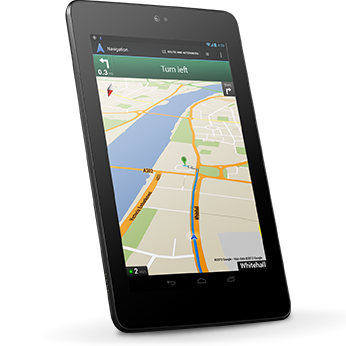
Thursday, 8 November 2012

Which e-Ink eReader to Buy?

A couple of days ago I posted an article about choosing a mini tablet.  Clearly tablet computing is going to be the future for some time, so where does that leave dedicated eReading devices?

Well, dedicated eReading devices, using e-Ink, are essentially one trick ponies that happen to do their trick particularly well.  Unlike tablets, these devices can be read in strong sunlight easily.  Probably a big deal in California, not so important in north Wales.  They also have superb battery lives, needing charging once a month or every two months for some models.  This can actually be a weakness as well as a strength as the time between charges is so infrequent you can forget to charge up before an extended journey.  Although the tablet devices really need to be charged up daily or every other day, at least you get in the habit of ensuring they have a full charge before embarking on a train journey.

However they are superb at the trick they do and I feel that there is a place for these devices for years to come.  I suspect I will be using my 2 year old Kindle for years, despite having a Nexus 7 as my go-to tablet.  This December will almost certainly see these devices reach an all time high in sales and my personal take is that this will be the peak of those sales.  I think there will always be a place for them, but many people will choose to buy a tablet computer to use as their eReader in future and will not see a need for a dedicated device as well.  Probably a poor decision, but one people will inevitably make.

Anyway, if you are in the market for a dedicated eReading device, for yourself or as a gift, this is the time to look around.  There are more of these devices on sale now than ever before, but I'm going to concentrate on a small number, namely the Kindle family, the recently launched Nook eReaders, and Kobo eReaders.  All of these have UK based eBookstores you can wirelessly download eBooks from.

Here's some of the features you can expect to find on these machines.

e-Ink screens.  Basically these screens require very little power to display their content, the words on the eBooks you're reading.  They achieve this by only needing power to change the screen; once the screen has been changed the image on there remains indefinitely until power is applied again.  Not only does this mean that the devices only need charging infrequently, they read pretty much like traditional books too.  But as well as looking like books, they share their limitations also - like books they depend on external illumination such as sunlight or artificial light.  Some models are now being marketed utilising built in lights which obviously affect the battery life, but do allow you to read in the dark.  

Models featuring built in lights include the Amazon Kindle Paperwhite, the Kobo Glo and the Nook Simple Touch Glolight.

Verdict:  e-Ink screens are now common technology and all three manufacturers have developed lit screens.  Illuminated screens push the unit price up and affect the frequency of battery charges.  All e-Ink screens are designed to have the font size changed to suit the reader, so are suitable for all readers regardless of eyesight.

eBook formats.  All of the models featured will support multiple eBook formats, but in reality there's only two that we need to consider for most purposes.  Amazon devices read their own propriety format AZW, which is a permutation of the MOBI format and in fact the Kindle will read both of these.  What it won't read is the EPUB format, which is the industry standard and the one used by all of the other eReaders featured in this article which, in turn, will not read the Amazon format.  If it wasn't for the phenomenal success of the Kindle the only format anyone would bother about is the EPUB, however nobody can afford to discount the Amazon standard.

Verdict:  Format choices determine whether you are with Amazon or not.  If you choose Amazon you can still buy many of the books currently listed on Amazon through Smashwords in the MOBI format, however you will have to transfer them across from a PC manually.

Size.  As well as being very thin, eReaders are relatively compact and the screen sizes tend to mirror popular paperback book sizes.  In fact all the eReaders in this article are 6 inch screens apart from one, the Kobo Mini, which is a more compact 5 inches.

Verdict.  Regardless of whether size matters, 6 inches is pretty much standard in this field.  

Weight.  One area that eReaders score significantly over traditional books is weight.  The lightest Kindle is the basic Kindle at 170 grams.  The 3G version, which incorporates a keyboard, weighs in at 274 grams.  The two Paperwhite models, one with 3G, one without, come in at 222 grams and 213 grams respectively.  Over at Kobo, the Mini, unsurprisingly, weighs in at a minimal 134 grams.  Next in weight terms are the Touch and the Glolight models, both at 185 grams.  Finally the Kobo wireless weighs in at 221 grams.  The Nook Simple Touch weighs in at 212 grams while the Simple Touch Glowlight oddly reduces the weight down to 197 grams.  Perhaps the light is dual function!

Verdict.  If weight is a driving parameter then the models to look at, in ascending order of weight, are: Kobo Mini, Basic Kindle, Kobo Touch and Glolight, Nook Simple Touch Glowlight, Nook Simple Touch, Kindle Paperwhite, Kobo Wireless, Kindle Paperwhite 3G and finally the Kindle 3G.

Touch-screen or passive?  Initially eReaders were all very passive in screen terms.  However with the advent of smart phones and their touchy-feely screens expectations have been raised.  Some eReaders are controlled by a five way controller or via a keyboard, others have touchscreens. In fact, all of the eReaders mentioned above have touch-screens apart from the Basic Kindle and the Kindle Keyboard.

Verdict.  Pretty much all the modern devices have touch-screen technology.  The two Kindle devices are pretty much legacy items that probably will bite the dust after the Christmas selling period and this will become a moot discussion point.

Connectivity.  All of the models here can connect to the internet wirelessly.  Two of the Kindle devices can also connect using 3G, you pay a premium for the facility, but it is a one-off cost.  All have USB or micro USB connectivity and allow your to connect your eReader to a computer to transfer eBooks.

Verdict.  3G connectivity sounds useful, but probably isn't that important to most people, however is essential to anyone who wants an eReader but doesn't want or cannot get WiFi.  The 3G variants push the price up so high it becomes a marginal call whether to buy a tablet instead.

Price.  This is a moving feast as the three companies attempt to stay competitive.  Also, there can be variations between different retailers, so shop around.  In ascending price order, here are the prices for the models discussed so far: Kobo Mini - £60; Basic Kindle - £69; Nook Simple Touch - £79;Kobo Touch - £80; Kobo Glolight - £100; Nook Simple Glowlight - £109; Kindle Paperwhite - £109; Kindle 3G - £149; Kindle Paperwhite 3G - £169

Verdict:  The smallest and most lightly loaded model is also the cheapest, so at least that's fair enough.  The two 3G models are the two most expensive by a large margin.  They may suit some buyers, but most people would be better considering a full blown mini tablet instead when considering paying that much.  The rest of the models sit in a £30 band. It looks like Kobo have the edge, financially, for the lit versions and Amazon are leading the fiscal pack for the unlit versions, but don't forget that the basic Kindle isn't touch screen.  For the basic unlit touch screen race there's only £1 between the Nook and the Kobo, so the look and feel of the one you favour has to be worth more than that difference.

Final verdict.  Cheap and cheerful, mid priced and top end costs, the dedicated eReaders have competition at every step of the way.  My advice is to decide on the band you want to go for and then compare the actual models in your hands.  Aesthetics, as with all devices these days, is a personal but critical consideration.  And don't forget to watch out for discounting - the competition over the next few weeks is likely to be fierce.

----------------------------------------------------------------------


I can be followed on Twitter too - @RayASullivan
or on Facebook - use raysullivan.novels@yahoo.com to find me

Why not take a look at my books and read up on my Biog here

Want to see what B L O'Feld is up to?  Take a look at his website here

Worried/Interested in the secretive world of DLFs?  Take a look at this website dedicated to DLFs here, if you dare!


Tuesday, 6 November 2012

Which Mini Tablet to Buy?

If you are thinking of buying a mini tablet for a loved one this coming Christmas, or perhaps want to leave a conveniently bookmarked blog posting lying around in the hope that you will receive one as a present, then there's never been a better choice.  Of all the emerging technologies, this is one reaching that pleasant level of maturity that means you're not running the early adopter risks, nor are you buying at the end of the line.

There are a number of mini tablets out there, from a broad range of technology firms, but this article is going to concentrate on just four models.  These are, in no particular order; Amazon Kindle Fire, Apple iPad mini, Google Nexus 7 and Nook HD.  Three of these run on the Google Android Operating System (OS), although the Amazon product and the Nook are heavily cloaked under a software skin.  The iPad mini uses the Apple IOS that is used on the larger iPad devices as well as on iPhones and iPod Touch devices.

Is one OS better than the the other?  It's fair to say that this can polarise opinions and many users of these two OS are so heavily persuaded that they'll never consider the other.  If you are one of those and IOS is your preferred OS then, if you're buying a mini tablet for yourself your choice is pretty well sorted.  The Apple IOS is a holistic environment pulling the iCloud and other Apple devices in your home together seamlessly.  Android is moving towards a more coordinated environment but is still developing in that respect.  But as a pure OS it is fine.

Verdict on OS selection: If you already have a strong preference for IOS or Android, then stick with it.  Otherwise make your decision on other factors.

All four tablets carry 1 GB of internal memory. The RAM varies between the models and is generally a cost driver.  The Amazon Fire comes with 16GB and 32GB variants; the iPad mini in 16, 32 and 64GB; the Nexus 7 is available in 16 and 32GB versions; Nook HD in 8 or 16GB.  More RAM means more storage of photos, books, music.  The Nook is expandable with external storage using a micro SD card up to 64GB and the Amazon Fire comes with apparently unlimited access to the Amazon Cloud for storing media in.  Make your decision based on the likelihood of storing films, photos and music but don't get hung up on book storage - to fill any of these devices up with eBooks would require constant reading until the end of the next Century.

Verdict on RAM: My recommendation is to go for the most storage you can afford as it is generally impracticable to upgrade with this technology at the moment,  perhaps something that we as consumers should be complaining about.  As RAM size affects price you need to consider all the other aspects first.

Screens:  All four devices have multi-touch screens so you can zoom in on an image by spreading with your fingers, so the factors to consider here are size and resolution.  The Fire, Nexus and the Nook all have 7 inch screens, the iPad mini 7.9.  So the iPad provides a little bit more real estate to work with, which may be a deal breaker for some.  In terms of resolution the iPad mini comes off worst with a resolution of 1024 x 768.  The Fire and the Nexus have 1280 x 800 and the Nook has 1440 x 900.  Not only is the Nook screen better on paper, it gets rave reviews for clarity.

Verdict on screens:  If screen quality is paramount, then the Nook has to be a major contender.  If other factors drive you away from the Nook then either of the two remaining Android devices have to be in the running.  The iPad mini comes off worst in this category, but to put it into context the screen is the same resolution as the very popular iPad 2. So if you've seen one of them in action and don't have an issue with the resolution then perhaps any of these devices are fine.

Cameras:  The iPad mini has front and rear cameras, the Nexus and Fire front facing cameras only and the Nook has none at all.  Anyone who has watched tourists trying to use the full size iPad to take photos will probably agree that it looks a tad unwieldy, however the smaller form factor probably works with this machine.  With the Fire and Nexus the front facing camera is there just for Skype calls and updating social media, as it is with the  iPad mini front facing camera.

Verdict on cameras:  Nook doesn't have any, so if cameras are important, the Nook isn't for you.  If you only want to Skype then either of the other two Android machines or the iPad mini would be fine, however if you want to use your tablet to photograph your world around you then it has to be the iPad mini.

eReader compatabilty:  With Amazon pitching the Kindle and Barnes & Noble pitching the Nook it may be that potential purchasers of these devices got to this point after deciding to buy something to read eBooks on.  Of course Apple has its own bookstore too, so that puts the iPad mini in the frame too.  Google also have a bookstore, but at present it doesn't appear to have the range of books available through B&N, Amazon or Apple.  What isn't necessarily obvious is that many eBook sellers (including Amazon and Barnes & Noble)  provide free apps for Apple and Android devices so you aren't necessarily limited to the books from the company that sells your tablet.  Certainly you can load the Kindle app onto the iPad, but you can't, however, load Apple iBooks onto Android devices.

Verdict on eReaders:  All four devices will allow you to read eBooks from various eBook sellers.  The iPad is slightly more flexible, but you should be able to obtain any eBook on any machine by some means.

Apps.  Here it does get a little complicated.  Apple pretty much invented the App market and have at least a year on its competitors.  It's almost certainly the fact that any App you want, if it exists, it will be available for the iPad mini.  Google, who developed and own the Android OS, are playing aggressive catch up and the Nexus has access to the whole Android App market.  Both the Fire and the Nook have limited access to Apps due in part to marketing decisions and in part, I suspect, to their software skins.

Verdict on Apps.  The iPad mini has the largest App range of all of these devices, however I'm fairly certain that most of the important/desirable Apps are also available on Android.  However you may not be able to use the Fire or Nook to gain access to some of them.  If Apps are important along with Android, look at the Nexus 7.

Price: Here we go, please remember that prices will change over time and the degree of competition  we are seeing will almost certainly make the manufacturers review their prices over the next 7 weeks.

Amazon Fire: £159 for the 16GB version, £199 for the 32GB version.  There is also a lower spec version of the Fire for £129.  To read more, follow this link.

Kindle Fire: quick tour

Apple iPad Mini: £269 for the 16GB version, £349 for the 32GB version and £429 for the 64GB version.  Extra if you want 3G connectivity. To read more, follow this link.


Google Nexus 7: £159 for the 16GB version, £199 for the 32GB version.  To read more, follow this link


Nook:  Believed to be £159 for the 16GB version, but we'll have to wait a few more days for the actual price.  It is going to be widely available, see my other Nook related articles for the list of sellers.

barnes noble hd plus

Verdict on prices and overall round-up:  Well, it looks like £159 is the price point for 16GB Android 7" tablets, so it's down to the other variables if 7" and Android is what you are looking for.  The Nexus has the greatest flexibility in this price range, however the Fire is getting great reviews too.  The Nook has its work cut out, but take the opportunity to look it up.  £199 seems to be the next price point, for 32GB devices.  Probably, for longevity and usefulness, 32GB is a good option for many users.  The Apple product is looking very expensive at the moment, but that price may drop after the initial rush is over.  It is charging £110 more for the 16GB version over it's Android competitors, however you do get more than just the hardware with Apple.  It's just whether it's worth spending that much extra for the IOS.

Added thoughts:  While tablet computing is clearly the next big thing, Cloud based storage is likely to be a major game changer.  Consequently the move towards larger internal memory capacity may be a red herring in the long run.  Apple and Google are both offering Cloud based storage for your music - Apple for £22 a year for up to 25,000 tracks and Google for free for up to 20,000 tracks.

Summary:  As discussed at the front of this blog entry, if you're set on Apple and want a mini tablet, then the iPad mini is the only device you need to consider.  My advice would be to buy the largest capacity device you can afford, but freely acknowledge that the whole family are overpriced.  Out of the Android machines I would suggest that the Nexus 7 32GB device is probably inching ahead of the Kindle Fire, which is slightly further ahead again of the Nook HD.  Watch out for aggressive discounting amongst the Android devices as they are all competing for a crowded market space.  If Google keep their prices static then, in a perfect world Amazon would knock £10-£20 of the Fire and Barnes & Noble would discount the Nook HD even heavier to achieve market share.  The iPad mini may or may not drop in price nearer the 25th December, however it is really possible that it will drop after.

----------------------------------------------------------------------


I can be followed on Twitter too - @RayASullivan
or on Facebook - use raysullivan.novels@yahoo.com to find me

Why not take a look at my books and read up on my Biog here

Want to see what B L O'Feld is up to?  Take a look at his website here

Worried/Interested in the secretive world of DLFs?  Take a look at this website dedicated to DLFs here, if you dare!