Books

Books
Books written by Ray Sullivan
Showing posts with label Apple iPhone. Show all posts

Thursday, 17 July 2014

Apple out of touch

Like many households we've become locked into the Apple ecosystem.  Not me personally, I'm a bit of a rogue running an Android phone, an Android 7" tablet and a Windows 8 Surface RT tablet, so I'm spreading the love across two operating systems myself.  My wife is the Apple user, with both the iPad and the iPhone.

It was the iPad first, if my memory serves me correctly, followed by the iPhone.  Earlier adopters will have bought the iPad second, but it's all the same as far as locking-in is concerned. Part of me struggles with the locking in part - I'm toying with the idea of moving over to a Windows 8 phone when my contract comes up for renewal later this year. Because I'm not tied completely to either Android or Microsoft I can swap around as much as my contract allows me.

Apple users, though, struggle with this lack of loyalty, and with good reason. Apple were first to the post with a joined up ecosystem, linking devices together so that photos taken on the iPad appeared almost instantly on the iPhone and vice versa. Same with their calendar, music and, of course, apps. Now I've blogged about this a few times previously, but the ecosystem appears to be more dysfunctional than ever. Photos are very sticky, once in almost impossible to remove, so the photo library grows and grows, to the point that my wife has deleted virtually all her musice from her iPhone to accommodate the photos. Moving music seems harder than we remember it, too. Initially my wife used to use her iPhone like a juke box, changing songs to suit her mood and season. As her phone is only 16gb versus the iPad 32gb she always had to take care not to bust her storage, but in the last year or so that has become almost impossible. As her phone contract is up later this year she has mooted changing to a non-Apple product, but then the crisis regarding the ecosystem always crops up.

But now it seems that Apple have come up with a potential solution, albeit unintentionally. They've just revamped their iPod Touch MP3 players, dropping the price a tad while upping the spec. They've also added some colour to the devices, so that may please some potential buyers. The biggest improvement, apart from price, is the inclusion of a 5mb camera. So users could pick up a larger capacity iPod - they go up to 64gb - so all of your photos, music and diary events could be stored on the one device, it could become the go-to camera to carry around, it can share with the iPad and the iCloud.

And users would be free to go with whatever phone, based on whatever OS they wanted. Which is good news for Android and Windows 8 phones, because that is probably where Apple customers will go as soon as their phone contract is up.

---------------------------------------------------------------------------------------                                                         
Visit my Book Website here


    Visit Project: Evil Website here                                        Visit DLF Website here

        Follow me on Twitter  - @RayASullivan

        Join me on Facebook -  use raysullivan.novels@yahoo.com to find me

Tuesday, 14 May 2013

iPhone and the Cloak of Invisibilty

Apple are working hard to maintain a level of differentiation between their products and the competition.  It's a multi-pronged affair what with lawsuits, cheaper materials and new features.  In fact the lawsuits and the cheaper materials won't help differentiate them from the likes of Google, Samsung and anyone else involved in making smart phones.  But the new features might and to be fair it has been Apple's forte in the past.

It seems they've taken a leaf out of Harry Potter for their latest idea - I don't know if JK Rowling will challenge their latest patent application but perhaps she should as it does have a whiff of 'inspired by' about it.

Apple are talking about invisible buttons.  If anyone is going to be offended by a mobile phone festooned in appendages for turning them on and making adjustments, then it has to be Apple.  Their approach to minimal hardware is famous; Steve Jobs challenged each and everly knob, dial and slider proposed for the original iPods and ended up with the devices that made Apple rich again.  The iPhone has followed in the footsteps of the iPod but does have a lot more buttons than that original iPod did.  I guess it does do a few more things than an MP3 player and there's only so much you can turn over to soft controls.

Plus the iOS is undergoing a radical overhaul that will see it move away from its real world images of torn notebook pages and crackled finishes to a new clean interface that will be minimalist in appearance.  So no offloading hardware buttons onto the iOS anymore, I guess.  Hence the patent for a cloak of invisibility.

In fact Apple's been beaten to this one, and not just by JK.  My wife has identical flower patterned covers for her iPhone and her iPad.  The cry of 'where's my phone?' resonates around our house on a regular enough basis thanks to the phone being left on top of the iPad, so much so it's become a bit of a family catch-phrase.  And the amount of times the iPhone hits the kitchen floor tiles indicates that not all of the cries are in jest.  Luckily the current version of the iPhone is still built with the high grade materials Apple are hinting at losing in future releases.  If they do start making future versions out of cheaper materials - and a less expensive iPhone is a desirable future - then I guess matching iPhone and iPad cases might be off the menu.

The way the patent has it, the new iPhone buttons will only be visible when they are needed.  They will be manufactured to a very high tolerance and will be almost impossible to see unless there is a need to use them.  Some of the time that will be determined by the actions ongoing - an incoming call, for example.  Alternatively they will become visible when your hand or finger passes over them, using heat signatures probably.  It seems that microscopic pin holes in the buttons will allow light through when the  button is needed.

The patent promises the phone will remain as clean as Steve Jobs could ever wish for, while being as festooned with buttons as the new leadership team deem necessary.  My guess is that Steve would still want the button count to be a low as possible - it wasn't clean for clean's sake for Jobs, it was a means to an end where the user had as simple an interface as possible.  My guess is that while the new phones, when they arrive, will look sleek and smooth, clean as a whistle.  I'm not convinced they will be a minimal as Steve would have wanted.

But at least they will be available to Muggles.


------------------------------------------------------------------------------------


                                                          Visit my Book Website here

        Visit Project: Evil Website here                                        Visit DLF Website here

        Follow me on Twitter  - @RayASullivan

        Join me on Facebook -  use raysullivan.novels@yahoo.com to find me

Tuesday, 19 March 2013

iPhones to help control spacecraft

I've banged on about the way consumer products are making their way into aerospace applications by the back door before, first with a rant about iPads and Kindles being used to provide electronic manuals in flight and more recently in a posting about an Android phone blasted into space to prove or disprove the Alien tagline 'in space nobody can hear you scream'.

Well, the guys and gals at the European Space Agency (ESA), Europe's answer to NASA, are at it now, but at least they are leaving the mobile phones on the ground.

They've noticed that a gadget that is becoming very popular has a technical similarity to a device they are developing for use in space.  The gadget is the Parrot AR Drone Quadricopter, a mouthful sober or drunk and currently retailing in the UK for about £300.

The price tag makes it accessible to many people with a yen to play with a remote control helicopter-like model aircraft and keeps its price down by letting the purchaser supply the control unit by downloading an app for their iPhone, iPad or Android machine.

ESA are also playing with remotely piloted vehicles and are struggling with the way humans control them.  Perhaps it's the bulky gloves astronauts tend to wear, but controlling the space-borne flying robots are proving a challenge to them.  But they've noticed that there's a lot in common between the way we interact with the Quadricopter and how the space robot is controlled.

They have developed an iPhone app that taps into the cameras on the Quadricopter that lets the users play a game with their device attempting to dock with a virtual airlock.  Points are awarded for cleaner docks that have the added excitement of operating a real, three dimensional device while immersing in the augmented screen image.  Data gained from users playing the game will be fed back to ESA for analysis.

You see, it's not the game but the instinctive micro-corrections the users deploy that interest the ESA boffins.    This is an interesting way of tapping in to the collective skill-set of humans, to help with the automation of the devices in space.  It's low cost - in fact it's technically free to ESA as you provide your own Quadricopter - but it could be very effective.

At the moment Android devices appear to be left out  despite being on the Quadricopter controls list.  However Google may just turn the concept onto something useful closer to their hearts and to home.  If someone could develop an Android app to control bumper cars, then the data collated could be fed back into their self driving car project.

Or maybe not!


---------------------------------------------------------------------

I can be followed on Twitter too - @RayASullivan
or on Facebook - use raysullivan.novels@yahoo.com to find me

Why not take a look at my books and read up on my Biog here

Want to see what B L O'Feld is up to?  Take a look at his website here

Worried/Interested in the secretive world of DLFs?  Take a look at this website dedicated to DLFs here, if you dare!

Saturday, 2 March 2013

In Space ... Nobody Can Hear You Waste Money

A satellite designed and built in the UK has just been launched on behalf of India.  As usual on these satellites it is crammed full of ingenious experiments designed to unravel the mysteries of modern life.  For example, there are tow experiments designed to test the concept of jet propulsion which, oddly, was an integral part of the process that got the satellite up there in the first place.  To be fair, and quite a bit less cynical, both experiments utilise esoteric materials and methods, but the concept is jet propulsion.

But the real aim of the satellite is to test the capability of consumer products to be used in high tech enviroments.  I've mentioned in earlier blogs about the use of iPads and Kindles in commercial aircraft to provide access to manuals.  I've also expressed a bit of caution over the use of these devices because my aeronautical engineering background has conditioned me to the the fact that the over-inflated costs associated with proving airworthiness of individual components isn't entirely without basis.  In fact, due to the lack of a hard shoulder at 50,000 feet, ensuring that components are dependable under duress is quite important,  especially if you are a passenger.  So to use commercially available consumer products without proving their reliability is a risky business unless the application is not safety critical.  I would suggest that access to instructions when the alarms are sounding and the systems are failing is probably safety critical.  Not the time to find out that the Kindle has run out of juice or the iPad has decided to upgrade to iOS 7.

The satellite experiment involves an android phone - not an Apple, note, this isn't rocket science and the cost of an iPhone over the price tag of a satellite and launch vehicle probably soaked up most of the budget anyway.  The primary aim of the experiment is to see if the phone - a Nexus by the way - can control the satellite.  Presumably navigation will be by Google Earth - another good reason to avoid using an Apple - but the main purpose will be controlling the various experiments on the satellite such as measuring the magnetic field around the phone.  Possibly this will lead to an improvement in mobile phone technology for all of us over time - I for one am constantly irritated by the way the Earth's magnetic field interferes with my texting.

But there is one experiment that really raises my eyebrow (just the one, Roger Moore isn't the only Brit who can control single eyebrows, you know).  We must be reaching the point in space exploration where, actually, we have found out all we need to know.  Because they have developed an app that plays back pre-recorded screams and attempts to 'hear' them using the phone's microphone in order to put to bed the age-old controversy that started with the tag line in Alien 'in space, nobody can hear you scream.'  Relying only on mathematics and physics I'm quite comfortable with that tag-line, especially as I'm unlikely to ever need to  prove it one way or the other.  And I'm not generally that easily satisfied with movie related science - I've just watched, and enjoyed in a devil may care way, the latest Die Hard movie which plays fast and loose with science fact.  I'm not going to spoil the film for those of you waiting to watch it but I'd just like to point out, for the record, that the Chernobyl reactor that ran away (and is still burning nicely, thank you) is encased in many feet of concrete so walking into it isn't likely.  Nor is there a magic gas that suppresses the effects of radiation that allows workers to walk around without any protection - if there was, I doubt Chernobyl would be a problem to anyone right now.  And reducing the amount of fissionable material is absolutely the opposite to why the chain reaction went haywire.  But hey-ho, I digress again.

I'm sure Alien, and virtually every other Sci Fi movie, book, short story and cartoon (and I freely include my own SciFi books in this list) contains convenient 'facts' that aren't actually true, but the scream in space issue is probalby not one of them and hardly worth blasting an otherwise useful phone into space.  I'd have tried checking for cell phone connection from space as that is likely to be the most useful facility given the advent of space tourism about to kick off.  'Hello, I'm in space...'

I hope it all works, even the alien scream bit, but I also hope that the sponsors of the experiments don't take any success to mean that they can start using commercially available consumer devices to control space vehicles that fly over my house.  Just because it didn't fail doesn't mean it will work every time, or at least conform to standard measures of reliability for the aerospace industry.  For that, I'm afraid they will need to embark on proper levels of assurance testing.

And believe me, in aeronautical engineering, everybody can hear the accountants scream.


---------------------------------------------------------------------

I can be followed on Twitter - @RayASullivan
or on Facebook - use raysullivan.novels@yahoo.com to find me
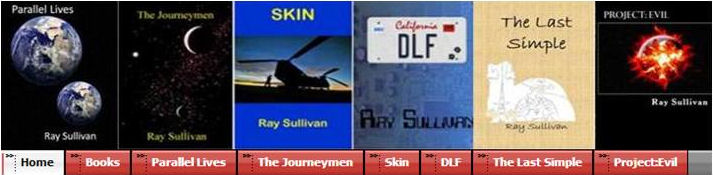
Why not take a look at my books and read up on my Biog here

Want to see what B L O'Feld is up to?  Take a look at his website here

Worried/Interested in the secretive world of DLFs?  Take a look at this website dedicated to DLFs here, if you dare!